The Frontiers of Multimodal Fiber-Optic Sensing in Enhanced
Geothermal Systems
Jonathan Ajo-Franklin
June 18, 2026 5:30 PM
265 McCone Hall
UC Berkeley Campus
Abstract:
Characterizing and monitoring the locations, connected geometry, and hydromechanical response of subsurface fracture networks is a crucial step in efficiently developing enhanced geothermal systems (EGS).Unfortunately, EGS reservoirs, dominated by high temperatures and corrosive brines, are a hostile environment for the classical inertial sensors most useful in these monitoring tasks; seismic sensors in particular have a poor track record during intermediate and long duration studies in geothermal reservoirs. Full characterization of fracture networks also requires coupled thermal and geodetic (e.g. strain) measurements at depth to effectively understand both the creation and dynamic behavior of fractures during flow. High-temperature distributed fiber optic sensing (DFOS) systems present one potential solution to these challenges in the context of EGS. We present results from the deployment of an integrated DFOS system at the Utah FORGE facility, part of the Fiber Optic Geophysical Monitoring Of Reservoir Evolution (FOGMORE@FORGE) project. The DFOS system was designed to measure microseismic activity (DAS), record timelapse VSP surveys (DAS), temperature during production (DTS), and fracture-associated strain (DSS and LF-DAS). The system was utilized during a circulation test (2023) and during the April 2024 stimulation experiment before failing due to fluid intrusion. A variety of interesting results have been generated from these measurements to date including a highly accurate microseismic catalog, moment tensor inversions for the small events recorded during stimulation, and passive reflection imaging of both induced and natural fractures in the EGS reservoir. Taken together, these datasets are providing a unique view of the interaction between induced fractures and small natural faults in basement rocks, a coupling which may be crucial for future EGS deployment.
About the Speaker
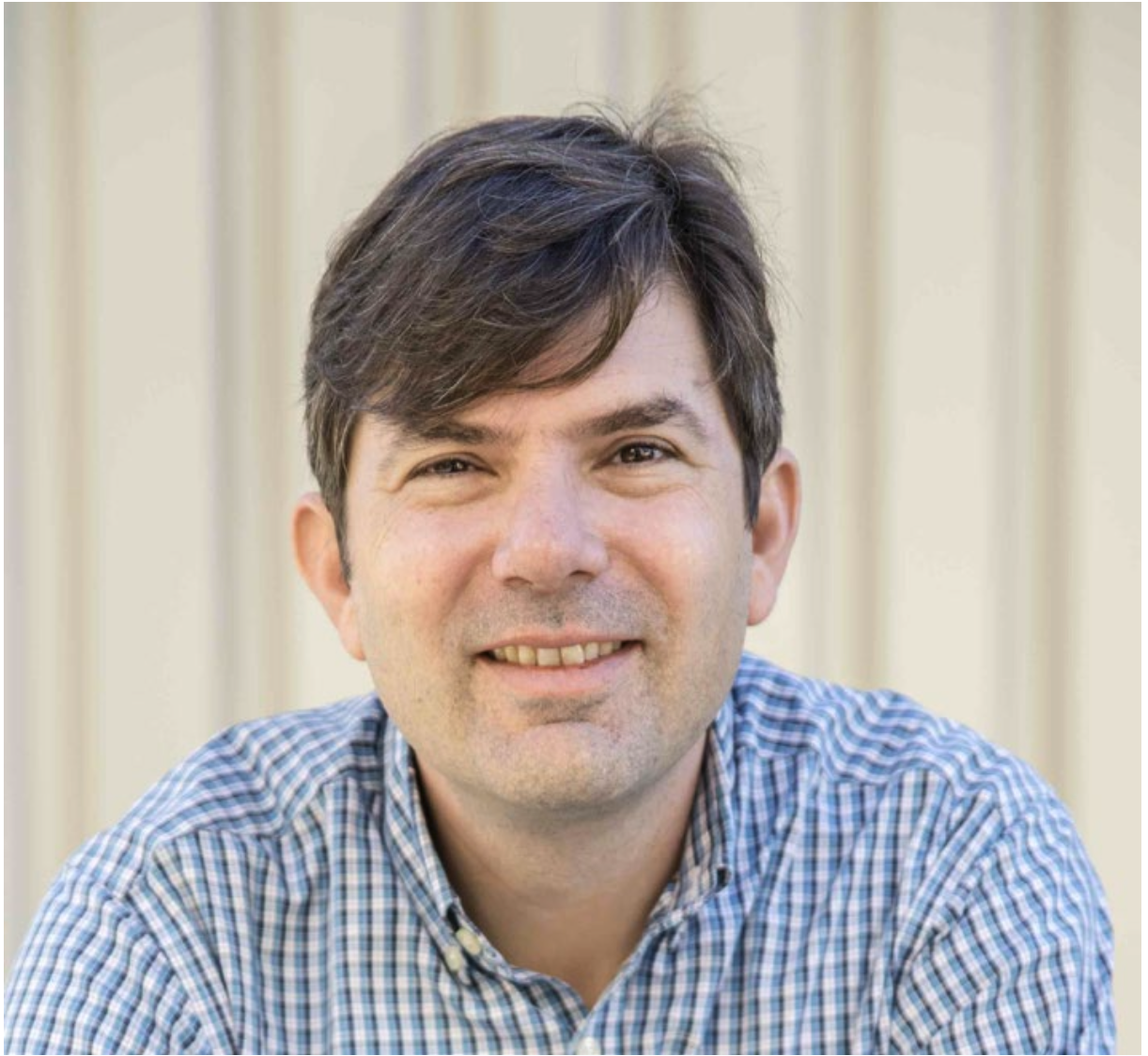
Dr. Jonathan Ajo-Franklin is a professor of geophysics at Rice University in the Department of Earth, Environmental, and Planetary Sciences (EEPS) as well as a visiting faculty scientist in the Energy Geosciences Division at Lawrence Berkeley National Laboratory (LBNL). Jonathan is an applied geophysicist working on problems in the environmental and energy domains including geothermal energy production, geological carbon storage, and near-surface hydrogeophysics. His group specializes in new acquisition and processing strategies for timelapse seismology including distributed acoustic sensing (DAS), permanent seismic source development, and high-resolution ambient noise approaches. He is also interested in the microscale physics and chemistry of geomaterials relevant to interpreting geophysical datasets, particularly the properties of fractures and mechanical alterations during reactive flow. He led the Imperial Valley Dark Fiber Project (DOE GTO) which explored approaches for geothermal exploration using DAS deployed on telecom fiber and was the PI of FOGMORE@Utah FORGE, an R&D project exploring integrated fiber-optic sensing for geothermal reservoir monitoring. Jonathan received his BA in Computer Science and History at Rice University(1998), followed by an MS (2003) and PhD (2005) in Geophysics at Stanford University. After his postdoctoral studies at MIT’s Earth Resources Laboratory (2005-2007), he spent 12 years on the staff at LBNL before joining the faculty at Rice EEPS in 2019.